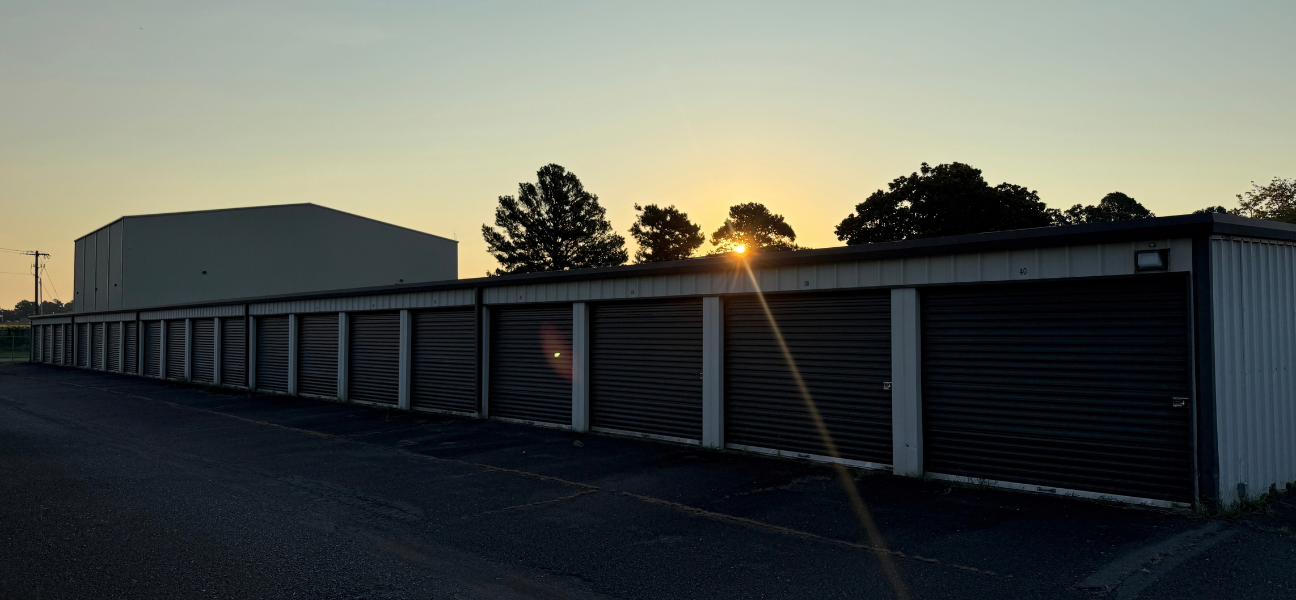
We closed on the Texarkana facility last week. Before that, tenants paid the way they always had. They drove to a nearby office, handed cash or a check to the manager who'd run the place for years, and that was the relationship. No portal, no auto-draft, no app. Just a person they knew.
We assumed that was going to be a problem for some of those old-fashioned folks. Change the payment model on people who are used to a face and a handshake, and you brace for pushback. Same with the locks. We're rolling out electronic smart units that let tenants unlock with their phone instead of a key, and we figured that was one more thing we may need to explain and defend.
Neither happened. Almost everyone we've talked to has been relieved, some genuinely excited, to hear payments are moving online with auto-draft as an option. No more driving somewhere to pay a bill. And the electronic locks got the same reaction: tenants like the idea of not carrying a key around. We haven't hit the learning curve on an app that can be a little finicky yet, since we haven't deployed the new locks. But the resistance we prepared for never showed up. People didn't want the old system. They were just used to it.
The facility sits on leased land, a 30-year ground lease with the Texarkana Regional Airport Authority, and that alone changed the paperwork. A ground lease isn't a typical real estate transaction, since we weren't purchasing the actual land. Lenders want different documentation, different assurances about the lease terms surviving a sale, different everything. Just when we thought everything was in order, the lender would come back with a request for something else. It wasn't one big holdup. It was a string of small ones, each pushing the timeline further out.
Closing felt less like crossing a finish line and more like clearing the last of a series of hurdles we didn't fully see coming when we signed the LOI. And in hindsight, that was just the start. Once we had keys, the real list of surprises began.
We knew going in that the note cards would be a problem. The previous operator ran tenant records that way, no software, no database, just handwritten cards in a box, and we expected some cleanup. What we didn't expect was how much of it was wrong. Phone numbers that didn't connect. Names for tenants who'd moved out years ago. Units marked occupied that weren't, and vice versa. Transcribing every card by hand was one thing. Finding out how little of it we could actually trust was another.
We're mostly caught up now, in contact with most tenants and getting accurate information as we go. But if you'd asked us before closing which part of the takeover would eat the most hours, we would have guessed renovation, not a box of index cards.
The inspection didn't catch it, but the AC unit needed to be replaced, and we found out right at closing. Whether that was something the inspector missed or something that failed between inspection and close, we don't know. Either way, it was a real hit, in cost and in the time it took to sort out before we could even think about anything else.
It ended up mattering more than we expected. Climate-controlled tenants had been telling anyone who'd listen that the units ran hot and the lighting was bad. We fixed both, replaced the AC and upgraded lighting inside and outside the facility, and the response from tenants who'd been complaining for a while was immediate.
We also found close to a dozen units marked vacant that weren't. Former tenants had moved out and left everything behind, units packed floor to ceiling with belongings nobody came back for. Not unusual, by the time someone's walking away from a storage unit, whatever's inside usually isn't worth much to them anymore. But clearing each one runs about $350 plus the dump fee, and that adds up fast across a dozen units nobody budgeted for.
Records are largely cleaned up. We're in touch with the tenants who matter, current info replacing what came off those note cards. The new locks are staged for a specific rollout date rather than a flip-the-switch change, so we can manage that transition deliberately instead of hitting a wall of confused tenants all at once.
The facility looks different too. Ground-clearing crews came through the other week and cleared the brush and vines that had grown into the chain-link fence line, branches hanging over, vines tangled through it for what looked like years. Watching a mini excavator knock down the overgrowth and a skid steer chew through it was oddly satisfying. Small thing, but it's the kind of detail that tells you the place is finally being looked after.
We closed on this thinking the hard part was behind us at the closing table. It wasn't. The hard part was everything nobody flags in due diligence: a locked box of handwritten cards, an AC unit that failed on nobody's timeline, a dozen units full of somebody else's stuff. None of it was catastrophic. All of it took longer than we planned for.
If you've ever taken over a property and found the real work started after the ink dried, you know the feeling. What's the surprise that threw you off your own timeline?
We'll be sharing more from this one as it settles in. Follow along if you want the rest of it.