We Also Like
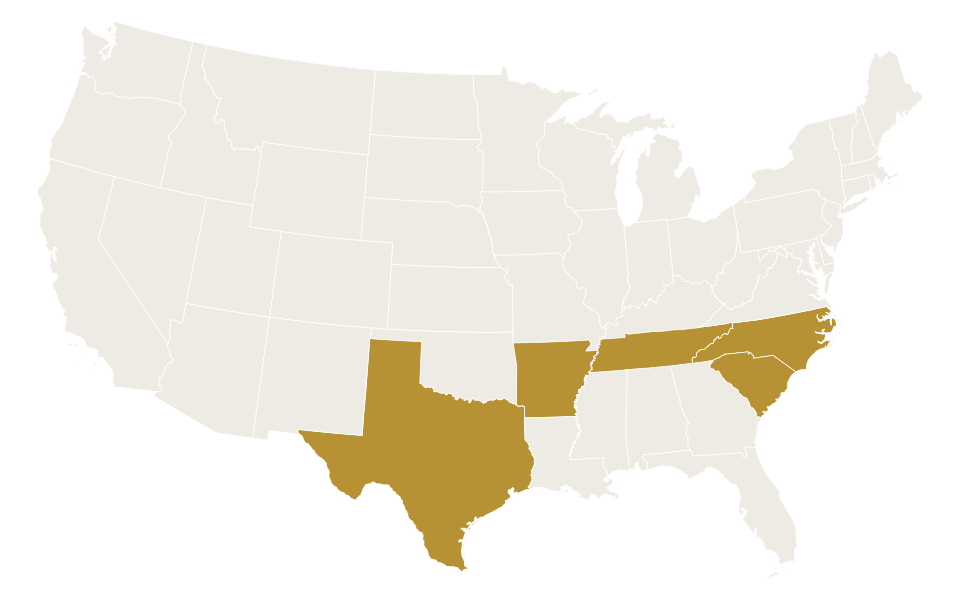
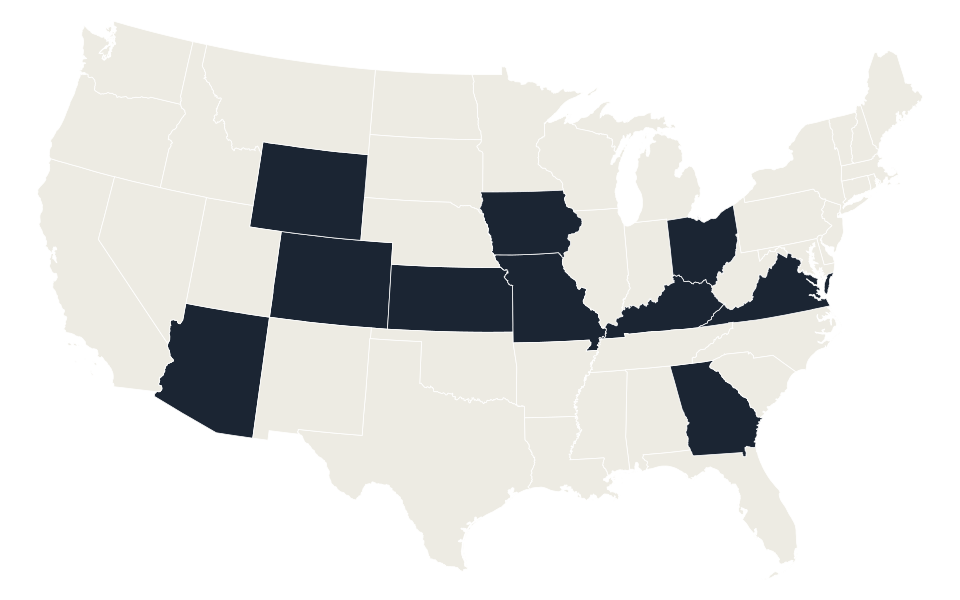
These states fit the thesis, and we are active in them selectively, where a specific city clears our bar rather than across the whole state.
A few we watch closely. In the Mountain West, Colorado and Wyoming both have growing markets with the kind of fragmented ownership we look for, and Arizona works for us in the secondary cities outside the Phoenix metro, where supply is tighter and the numbers still pencil. Across the lower Midwest and Plains, Missouri, Kansas, Iowa, Ohio, and Kentucky give us steady population and income growth in cities the institutions overlook. And in the Southeast, Virginia and Georgia round out the Carolinas corridor with their own pockets of inland growth.
What ties them together is the same filter we use everywhere: a growing city with limited new supply and an owner who never put a real operating system in place. When a market like that produces the right facility, we move on it, wherever the state line happens to fall.
Where We Don't Invest
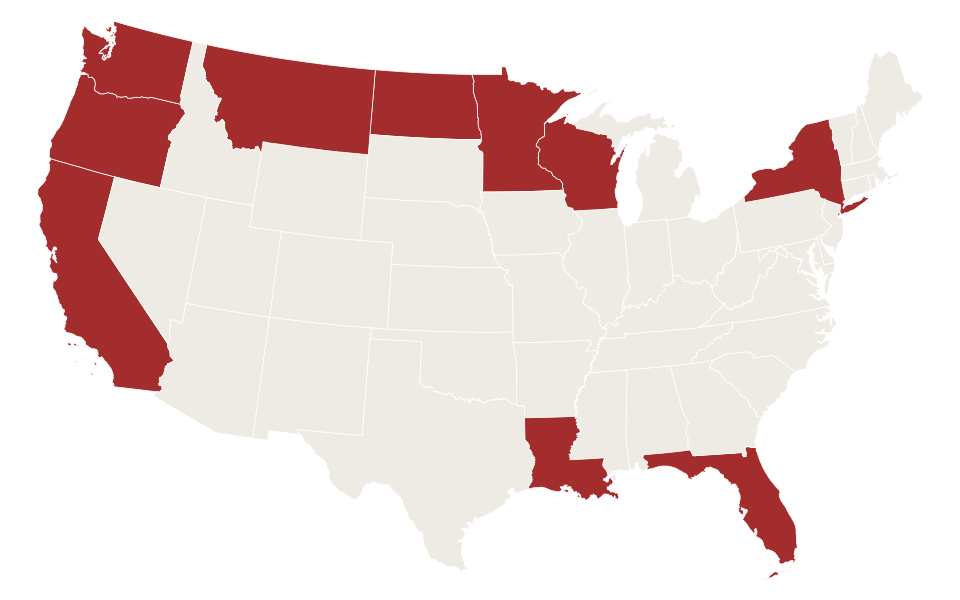
Knowing where not to buy protects returns as much as knowing where to buy. We pass on two kinds of geography for the same underlying reason: the weather changes the economics before we ever underwrite a deal.
The first is the hurricane coast. Florida is the clearest case, but it runs through coastal Louisiana, the Gulf, and the coastal stretches of the Carolinas too. Insurance is an operating cost we pay every year, and along that coast it climbs faster than rents do, with the added risk that a single storm season can wipe out years of careful operating gains. This is also why our Carolinas focus stays inland. We like those states, we just stay off their coasts.
The second is the cold-weather belt. The Dakotas, Minnesota, Wisconsin, and Montana carry a different kind of cost, more maintenance, higher construction expense, and more that can fail in a hard freeze. A facility in those markets has to absorb expenses a Sunbelt facility never sees, and that gap shows up directly in NOI.
We also weigh the regulatory and tax environment. A few states carry heavier tenant-side rules, higher compliance costs, or a tax basis that raises our operating risk, so they have to clear a higher bar before we would commit capital. California is the one we are asked about most, and for us it does not clear that bar. And within a state, the smaller cities sometimes lack the income or population growth to underwrite, so we work at the submarket level rather than the state level.
Every one of these is a line item that shows up in NOI, not a preference.