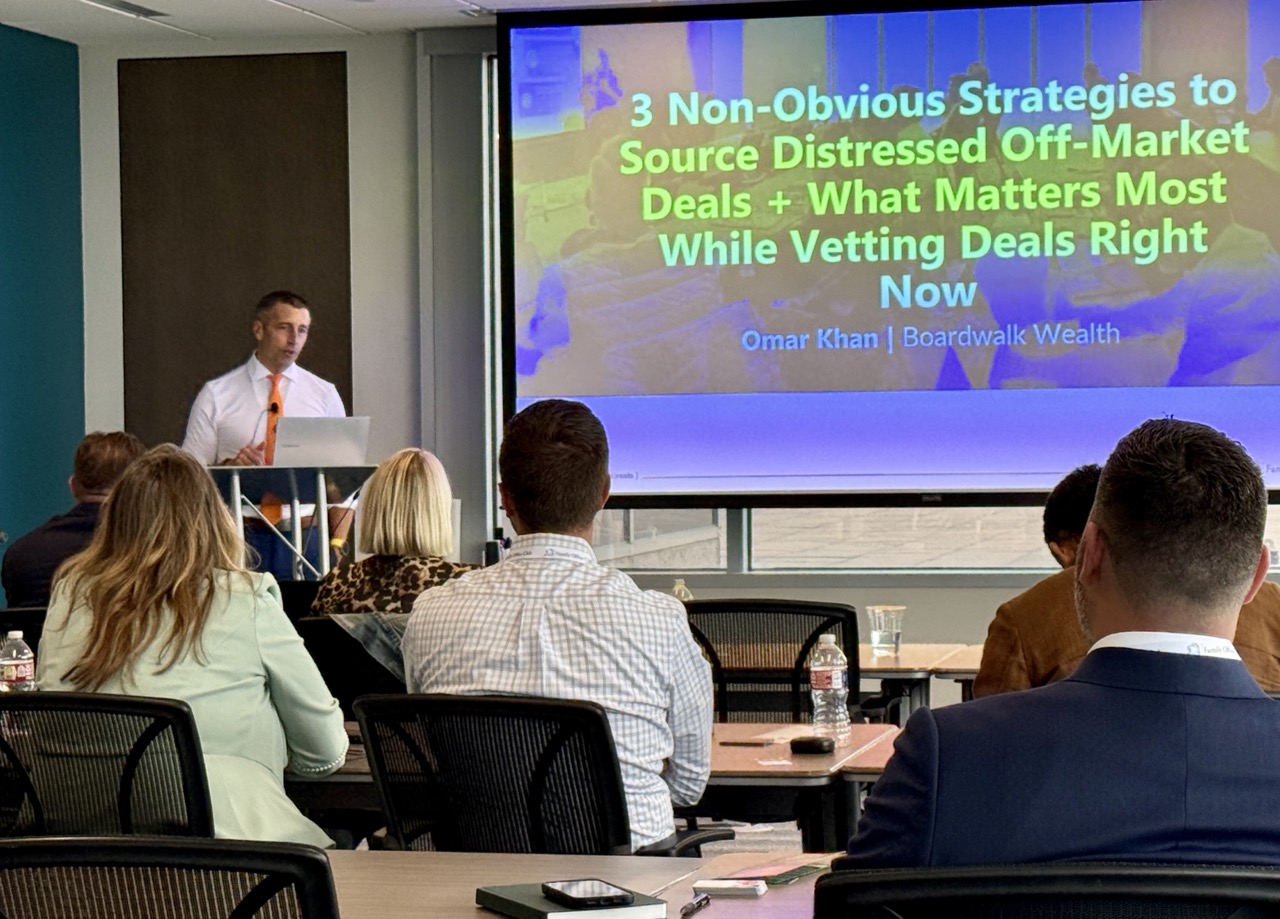
Last Thursday I spent the day in Dallas at a Family Office Club event. Full day - multiple sessions, speakers, and speed networking throughout.
I went in expecting good networking. I came out with more to think through than I planned.
The conversations covered a lot of ground - how sophisticated investors evaluate and structure deals, how AI is actually being used at the highest levels of business and investing, and how the people managing serious wealth think about deploying it. Some of it confirmed things I already believed. Some of it surprised me. Thought this was worth sharing.
Richard C. Wilson has spent 19 years working directly with high-net-worth investors, family offices, and founders - both raising capital and deploying it. That context matters because the AI tools he's built aren't generic. They're constructed from 13 books, 1,500 investor transcripts, and over 1,000 recorded talks from billionaires, fed into systems that produce custom pitch scoring, one-liner generation, and actionable advice tailored to both operators and investors. He estimated about 0.1% of that material is truly actionable for any given person at any given time - that's always been a human skill problem. AI is what finally makes it a systems problem.
He also walked through using AI as a contact management layer - sorting leads into categories, pulling LinkedIn context, and drafting personalized follow-ups. All of it running somewhere between $20 and $200 a month.
Each morning an automated system reviewed the previous day - sent emails, calendar activity, work output - scored it against his stated goals, and delivered blunt feedback. One example he shared on a day where he scored a 47 out of 100. We're all a little generous when we reflect on how productive we've been. A system that scores you against your own stated goals doesn't let you get away with that.
One personal note: he mentioned Wispr Flow as a voice-to-text tool and I've been using it since Thursday. I thought it was just another transcription app - it's not. The gap between how fast you can speak versus type is real, and this closes it in a way that actually changes how you work.
I already had a solid handle on Claude projects and custom GPTs going in, but Richard C. Wilson surfaced a number of nuances I hadn't thought through - and it pushed me to take a closer look at some of the newer Claude releases I hadn't fully explored.
One thing he hammered on throughout the day was the one-liner - being able to explain what you do clearly enough that the other person stays in the conversation. I've noticed this in my own conversations over the years - when I'm listening to someone who's still working out how to explain what they do, I can feel the moment I lose the thread. They're still talking but I've already mentally moved on. It works the other way too. Early on I could see it happen in real time when I was the one rambling. If you can't land your one-liner cleanly, you lose the room before the conversation starts.
One of the clearest frameworks of the day: before a sophisticated investor writes a check, three things have to be true. They need to trust the industry. They need to trust you personally. And they need to understand the specific deal. Miss any one of them and the deal stalls - regardless of how good the numbers look.
Most operators lead with the deal. Projected returns, cap rates, equity multiple. But if someone doesn't understand why an asset class works, or doesn't have a real relationship with the sponsor, the numbers don't matter yet. You're solving the wrong problem. Richard C. Wilson framed it plainly: an investor might have already written you a check, followed your work for years, and trust you completely - but if the next deal is in Guam and they've never been within 3,000 miles of it, that's a trust gap that good numbers alone won't close.
The order matters: industry first, relationship second, deal third.
The deal structure content was equally strong. Gross revenue royalties, preferred equity, seller financing, equity warrants, multi-share class offerings - structures that used to be reserved for institutional players are now being used regularly by independent sponsors. The line that landed hardest: "Structure drives deal completion more than strategy." One example: a $3M asset acquired for $470K by carving out a specific piece strategically. The deal closed because of how it was structured, not because the business plan was exceptional.
Two operator presentations stood out.
Garen Armstrong built Shamrock Roofing to over $100M in revenue after recovering from a heart transplant, was nine figures into an exit process that fell apart one week before closing, and came out the other side with a software company - Trusty.ai - that he believes is now worth more than the roofing business itself. He built it because his data usage crashed AccuLynx, the dominant CRM in the roofing industry at the time. Rather than find a replacement, he built his own. $600K in annual savings, 175 users, a patent on the lead scoring system, and a platform now being adopted across home services.
The lesson wasn't about software. It was about what happens when a founder who knows an industry deeply decides to solve a problem rather than work around it. The moat he built isn't the roofing company - it's the data and infrastructure layer underneath it.
James Reed from Investa Capital runs a self-storage and flex industrial platform with a goal of 500 locations by 2050. A few things he's doing worth noting: he acquired one of his primary general contractors to control costs and execution timelines. He built FlexSpace Nation as a proprietary deal flow platform to source properties before they hit the open market. His conversion strategy - vacant retail, trampoline parks, old dealerships - is producing cost bases well below what new construction requires.
He also made a point that applies well beyond self-storage: if you're relying heavily on a key vendor and serious about scaling, it's worth asking whether a partnership or acquisition makes more sense than a contract renewal.
Richard C. Wilson closed the day with something that's easy to know and easy to forget.
Cold email reply rates dropped from 8.5% in 2019 to 3.4% today. For ultra-high-net-worth contacts it's closer to 0.2-0.5%. The inbox is saturated. What isn't saturated: showing up in the room, a voicemail, a real conversation at an event where both parties chose to be there. I left Thursday with a business card from a lender doing construction and agency financing specifically for self-storage in Texas. That conversation took five minutes and wouldn't have happened any other way.
Richard C. Wilson also ran an outreach campaign years ago - 370 companies, 70 replies, 8 investable opportunities, 2 transactions. Solid numbers on paper. But the more interesting part is that he's still getting follow-ups from that outreach eight years later. The relationships that started there never stopped compounding.
He also made a case for the printed newsletter. Not a blast email - an actual physical newsletter mailed to your top 100-300 prospects each month. It sounds old-fashioned, and maybe that's the point. In a world where everyone is optimizing cold email sequences and LinkedIn automation, a newsletter that just provided value with no pitch stood out enough that the Neutrogena family called him years later - not to invest, but to ask for a hiring recommendation - because he'd stayed top of mind long after most people would have been forgotten. Worth considering if you're already doing the work of creating content.
The common thread: the people in that room with the best deal flow and the most reliable capital sources weren't the best salespeople. They were the most consistent value-givers over the longest time horizon.
The honest take: a room with serious capital allocators and operators doing interesting things is a good place to pressure-test where you actually stand - not just whether your ideas hold up, but whether your execution does too. Some of what I saw confirmed we're on the right track. Some of it showed me how far behind I am on a few things I already knew mattered. That gap between knowing something and actually doing it doesn't close on its own.
The best time to build your investor network was before you had a deal. The second best time is now.
I flew back from Dallas with more to think through than I planned. The AI content alone was worth the day. The capital and deal structure conversations were also useful - a few of those ideas will translate directly into how we're approaching our current raise. And even the operators whose businesses look nothing like ours had stories worth sitting with.
If you're curious about what passive investing in self-storage actually looks like, or what we're working on at Frontier Storage Capital, I share updates here as things develop. Follow along if that's interesting to you.