Most people picture self-storage as a dominated industry. Extra Space here, Public Storage there, giant REITs owning everything. The reality is almost the opposite.
Roughly 65% of self-storage facilities in the United States are still owned by independent operators. Not regional players. Not institutional funds. Individual owners, often running a single property, who built the business decades ago and have been running it largely the same way ever since.
That's not a knock on them. They built something real. But it creates a specific kind of gap, and that gap is where the opportunity lives for operators who know how to close it.
I've spent the last several years studying this asset class, underwriting deals across Texas, and now acquiring facilities through Frontier Storage Capital. What I keep finding is the same thing: the facilities that look worst on paper are often the most interesting to buy, because the problems are fixable. Pricing that hasn't moved in three years. No online presence. Manual processes. Management that's checked out or spread too thin.
These aren't structural problems. They're operational ones. And operational problems have operational solutions.
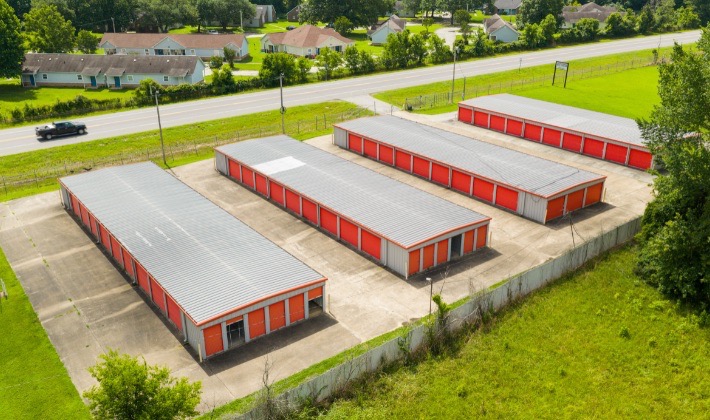
Self-storage grew up differently than most commercial real estate. The industry expanded fast through the 80s and 90s, largely driven by individual entrepreneurs who bought land on the edge of town, put up metal buildings, and ran a simple cash business. Low overhead, minimal staffing, predictable demand. It worked.
For a long time, though, financing was hard to come by. Lenders didn't have a clear framework for underwriting storage assets, and many banks simply weren't comfortable with the product type. That pushed early owners toward seller financing, personal capital, or creative structures just to get deals done. It also meant the industry grew organically rather than through institutional rollup, which is a big part of why ownership stayed so fragmented.
Institutional capital eventually arrived, but it focused on dense urban markets and major metros where the large REITs could cluster facilities and spread management costs. That left a massive swath of the country untouched: secondary cities, tertiary markets, small towns with growing populations and real demand for storage.
Those independent owners aged in place. Some passed facilities to family. Some kept running them as lifestyle businesses, not maximizing, just sustaining. The result is a market that's still deeply fragmented at the sub-institutional level, particularly in the $2M-$10M range where the large funds simply don't play. The deals are too small for them to bother.
That's not speculation. It's math. A fund managing $500M in assets can't spend six months of analyst time on a $3M acquisition in Abilene, Texas. The return on effort doesn't work at their scale. But it works fine at ours.
The fragmentation story explains why these facilities exist. But the opportunity is really in what's happening inside them.
When we underwrite a mom-and-pop storage facility, we're looking at the same four problems almost every time. Rates that were set years ago and never adjusted to reflect actual market demand. Little to no digital presence, meaning the facility is invisible to anyone who searches for storage online. Manual or paper-based processes that make even basic tasks slow and error-prone. And an owner managing everything themselves, often with no support staff and no real system underneath it.
None of those are fatal. In fact, they're the point.
A facility running 70% occupancy at 2019 rates, with no Google Business profile and outdated processes, isn't a broken business. It's an underleveraged one. The physical asset is there. The demand in the market is there. What's missing is execution.
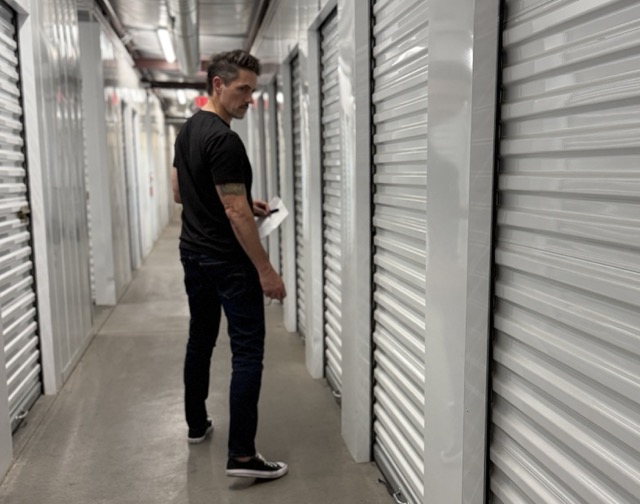
A facility we're currently acquiring in West Texas shows what this looks like in practice. When the owner brought in a third-party management company, occupancy was sitting around 90%. By the time we walked the property, it had dropped to roughly 30%. The gate was broken. Trash on the ground. Doors damaged or missing entirely - the kind of thing any tenant pulling up to their unit would notice immediately.
The management company wasn't running auctions on cancelled units. Missed payments weren't being followed up. Delinquent units were just sitting there, taking up space and generating nothing.
None of that happened because the market dried up or demand disappeared. It happened because the people running the facility had no stake in the outcome. The owner was remote. The operator was indifferent. And the asset quietly deteriorated while everyone looked the other way.
That's the misalignment problem in plain terms. It's also why we self-manage every facility we acquire. The people who bought it are the people running it.
That's the repeatable pattern. Buy below operational potential. Install the systems. Let NOI drive value.
The fragmentation that created this opportunity is real. But it's also temporary.
Institutional capital is moving down-market. The large REITs have largely consolidated the major metro assets they want. Regional operators are getting more sophisticated. Private equity is starting to look at portfolio acquisitions in the $20M-$50M range. The window where an operator can walk into a secondary market, buy a well-located facility from a retiring owner at a reasonable basis, and create real value through operations - that window is open now. It won't be open at the same scale in five to ten years.
The sub-$10M deal is where independent operators still have a genuine edge. Not because we're smarter than institutional buyers, but because we're sized right for it. We can move faster, underwrite more creatively, and build a direct relationship with a seller who doesn't want to deal with a corporate acquisition process. A lot of these owners have never listed their property. They've never talked to a broker. They want to know who's buying, what they're going to do with it, and whether the deal is going to close.
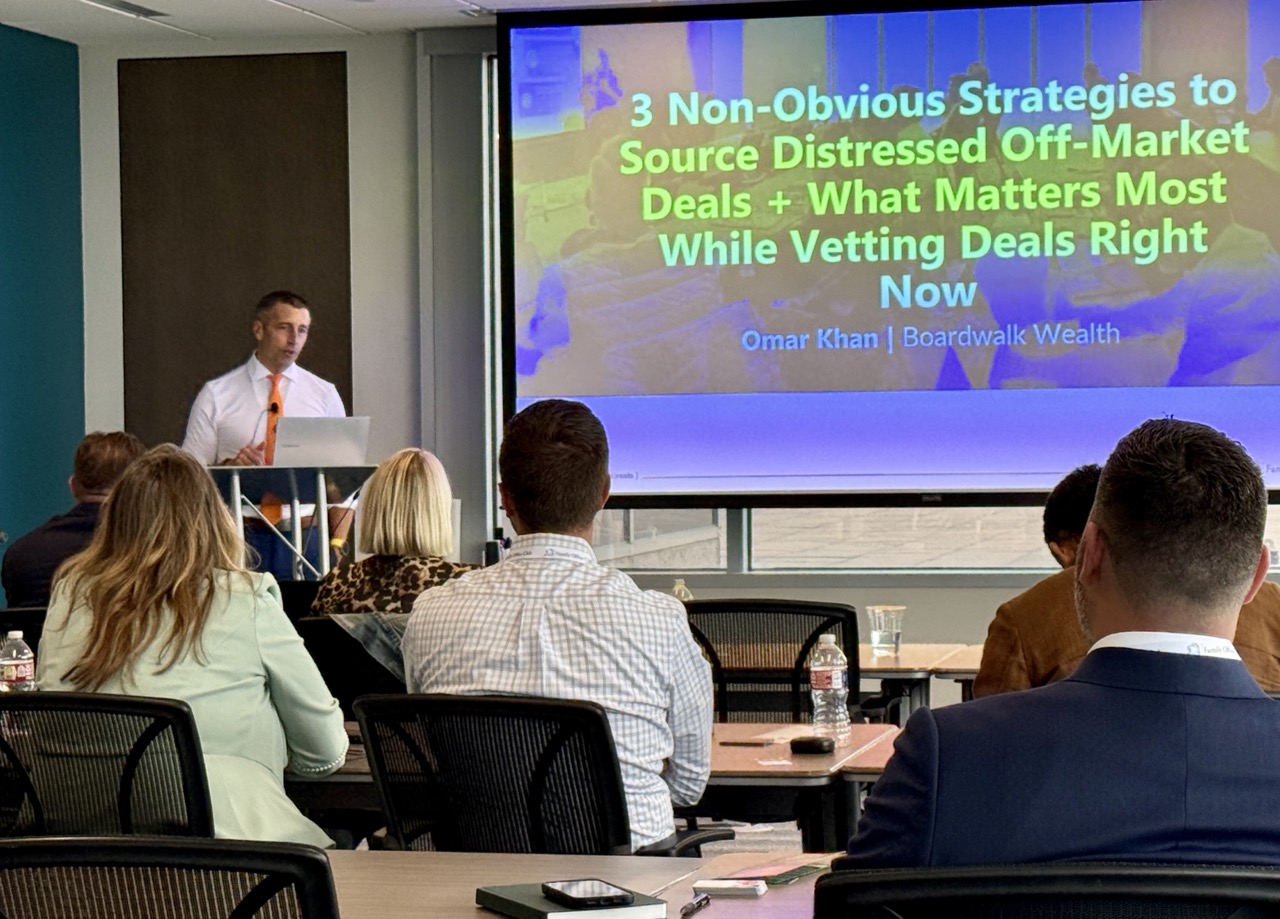
That's a relationship sale, not a transaction. We wrote about how serious capital thinks about deals like this after spending a day with family office investors in Dallas. And we're acquiring across high-growth Sun Belt markets, with Texas as our current primary focus, because the supply-demand dynamics, population growth in mid-sized cities, and concentration of independent ownership make it one of the strongest regions in the country for this strategy right now. We're not chasing a trend. We're buying ahead of one.
Most passive investors we talk to have looked at multifamily, maybe some single-family rentals, possibly a syndication or two. Self-storage rarely comes up early in those conversations. It's not as visible, it's not as glamorous, and most people don't have a mental model for how the business works or how that translates to opportunity.
That's changing, but slowly. And in the meantime, it means the investors who do understand the asset class are getting access to deals before the crowd figures it out.
The core thesis is straightforward. Buy a facility that's underperforming relative to its market. Install better pricing, marketing, and systems. Watch NOI grow. In commercial real estate, NOI growth drives asset value directly, so operational improvement compounds into equity in a way that's hard to replicate in other asset classes.
We raise capital on a deal-by-deal basis, meaning investors evaluate each opportunity on its own merits rather than committing to a blind fund. Minimum investment is $50,000. We target a 10% preferred return, with 100% of capital returned to investors before we participate in profits. The goal on every deal is a double-digit annualized return and an equity multiple that reflects the value we created, not just market appreciation we waited around for.
The facilities we're targeting aren't broken. They're just being run like it's 2015. That's a solvable problem, and solving it is what we do.
Most people evaluating storage deals focus on the asset - the location, the occupancy rate, the cap rate at purchase. Those matter. But they're not where the value comes from. We came to this asset class from years of operating businesses, with a track record of completing real estate projects that required real execution. That background is what drives outperformance. The returns follow from that.
Stocks move on news cycles, Fed decisions, and things nobody predicted. What would it feel like to invest in something where the returns come from decisions within our control?
Curious about storage or just looking at new options? Let's talk. I'd love to hear what you're focused on and share what we're working on.