The short answer is yes - but the reason matters more than the headline.
Texas has more self-storage per capita than almost any other state, which sounds like a warning sign until you understand what's actually happening in the market. The facilities that are struggling aren't struggling because there's too much storage. They're struggling because they're being run the way storage was run in 2005 - static pricing, no digital presence, manual operations, and ownership that's ready to move on. That gap between how these facilities are being run and how they could be run is where the investment thesis lives.
This post breaks down why Texas specifically makes sense for self-storage investing right now, what the risks actually look like, and what separates a good deal from a bad one in this market.
Storage demand doesn't come out of nowhere. It follows people - moves, transitions, life changes, business expansions. And Texas has been on the receiving end of one of the largest domestic migration waves in the country for the better part of a decade.
Between 2020 and 2023, Texas added more residents than any other state. Cities like Austin, Dallas-Fort Worth, San Antonio, and Houston have seen consistent inbound migration from California, Illinois, New York, and other high-cost states. But the growth story isn't just in the metros. Smaller cities - Abilene, Waco, Midland, Tyler - have seen population increases driven by job growth in energy, manufacturing, healthcare, and logistics. These are exactly the markets that institutional storage operators haven't prioritized, which means demand is growing in places where the supply of professionally managed facilities hasn't caught up.
Why does population growth matter specifically for storage? A few reasons. People moving into a market need temporary storage during the transition. People downsizing or consolidating households need long-term storage. Small businesses expanding into new markets need space for equipment and inventory. Each of those use cases represents recurring monthly revenue, and in a growing market, the demand floor stays elevated even when the broader economy softens.
Texas also benefits from something structural: the state has no income tax, business-friendly regulation, and relatively low cost of living compared to coastal markets. That combination has made it a consistent destination for both individuals and companies relocating out of higher-cost states. Each of those relocations is a potential storage customer - sometimes for months, sometimes for years.
There's also a supply metric worth understanding. The self-storage industry tracks square feet of storage per capita as a measure of market saturation. When a market adds population faster than new storage gets built, that ratio improves - meaning more potential customers for every unit of existing supply. In secondary Texas markets where new construction is limited and population is growing steadily, that metric has been moving in the right direction. More people sharing the same supply base means better occupancy floors and more pricing power for well-run facilities.
The markets we focus on aren't the obvious ones. DFW and Austin get the attention, but the real opportunity is in secondary and tertiary markets where population is growing, incomes are rising, and the existing storage supply is mostly mom-and-pop operations that haven't updated their rates or systems in years. That combination - growing demand, undersupplied professional management - is where the numbers tend to work best.
Population growth creates the demand. Operations is where the returns actually come from.
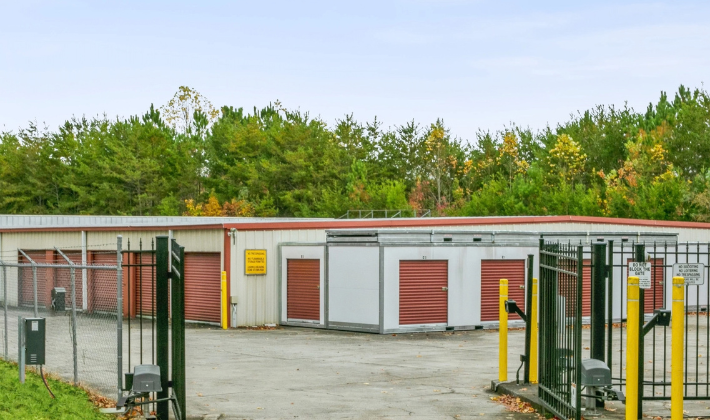
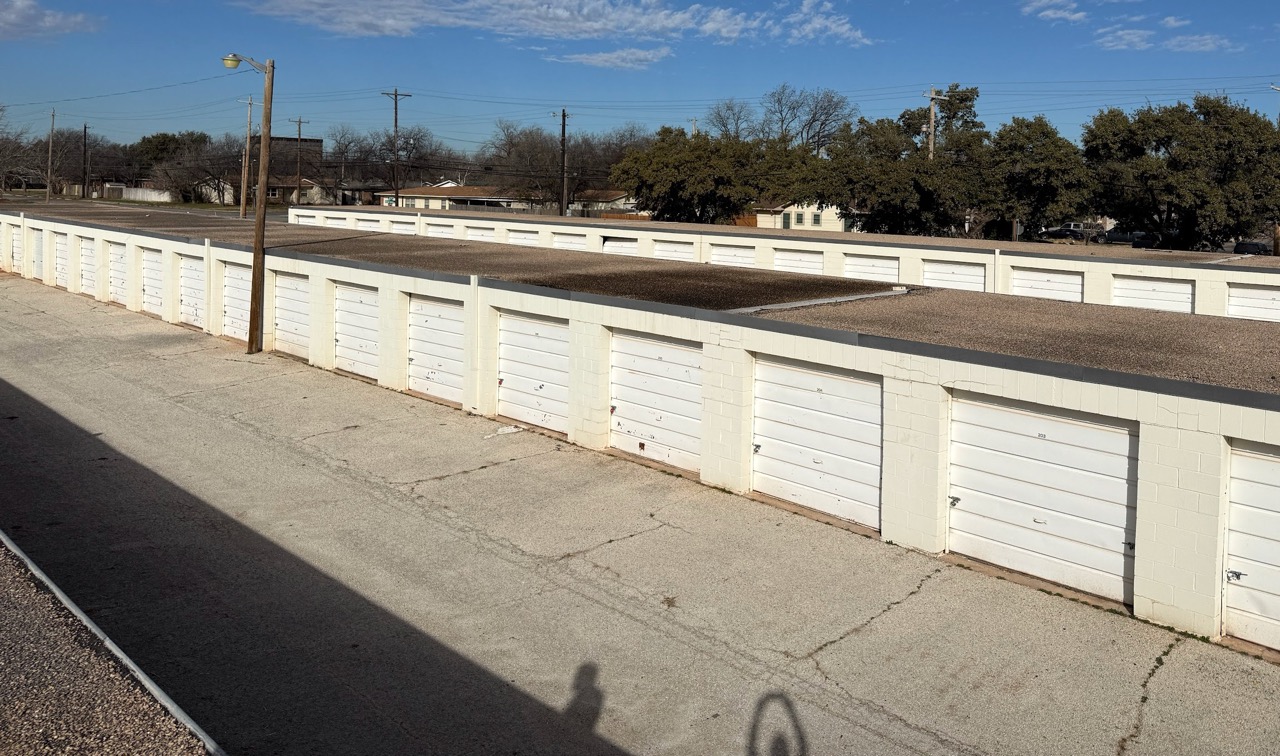
Most self-storage facilities in secondary Texas markets are owned by individuals or small family operators who bought the asset years ago, have been running it the same way ever since, and have little incentive to optimize. Rates haven't moved in years. There's no online rental process. Marketing is a roadside sign and a Google listing that hasn't been touched since 2019. Occupancy looks fine on the surface - 75-80% is common - but economic occupancy, meaning what the facility is actually collecting versus what it could be collecting at market rates, tells a different story.
This is the gap the investment thesis is built on. Not appreciation. Not a bet on population growth alone. The return comes from buying a facility that's priced based on what it's doing today, then closing the gap between current performance and potential performance through better operations.
In practice that means a few specific things. Rates get reviewed and adjusted regularly based on what comparable facilities in the market are charging and what demand signals look like. Online rental capability gets added so customers can lease a unit at 11pm without calling anyone. Marketing gets updated so the facility shows up when someone in that zip code searches for storage. Delinquency gets managed systematically rather than ignored until it becomes a legal problem.
Each of those changes has a direct line to NOI. And in self-storage, NOI is the number that drives valuation. A facility valued at a 7% cap rate that increases its annual NOI by $50,000 adds roughly $700,000 in asset value. That math is repeatable. The return comes from improving operations, full stop.
A facility we evaluated in West Texas recently was running at 76% occupancy with rates that hadn't been updated in over two years. Comparable facilities within three miles were charging 15-20% more for the same unit sizes. The gap between where that facility was and where it should have been wasn't a market problem. It was a management problem - and management problems are fixable.
Any honest answer to "is this a good investment" has to include the risks. Here are the ones worth taking seriously.
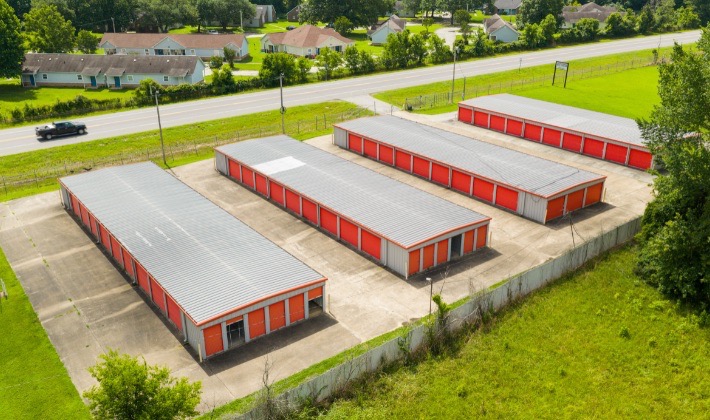
Oversupply in major metros. The oversupply concern is real, but it's mostly concentrated in large urban markets - Austin, Houston, DFW - where new construction has been aggressive. Secondary and tertiary markets don't attract the same development capital, which is part of why we focus there. A new 800-unit climate-controlled facility opening in downtown Austin is a different conversation than a 300-unit facility in Abilene where the last new build was a decade ago.
Acquiring at the wrong basis. The investment thesis only works if you buy below the facility's potential, not at stabilized value. If a seller has already figured out what their facility is worth at market rates and priced it accordingly, the operational upside is already baked into the price - and buying there won't generate the returns we look for. At best it produces modest cash flow with limited upside. That's not the deal.
Underestimating CapEx. Older facilities often have deferred maintenance that isn't obvious in a cursory walkthrough - roof issues, drainage problems, gate and security systems that need replacement. A thorough inspection and a realistic capital budget before closing is non-negotiable. We underwrite a CapEx reserve into every deal specifically because surprises on this front are common, and they compress returns fast if they're not planned for.
Interest rate and refinancing risk. Deals underwritten at one interest rate environment can look different when it's time to refinance. If rates stay elevated longer than projected, the refinance that was supposed to return capital to investors gets delayed or produces less than the model assumed. We underwrite conservatively on this front - assuming higher rates than today's market in our hold period projections - specifically because this is one of the variables least within our control.
Operator risk. This one applies to any passive investment, not just storage. The return projections are only as good as the team executing the business plan. If the operator can't manage delinquency, doesn't understand revenue management, or loses focus after closing, the asset underperforms regardless of how good the market is. This is why evaluating the operator - their track record, how they communicate, how they've handled problems in past deals - matters as much as evaluating the asset itself.
Texas mitigates some of these risks structurally. The demand fundamentals are strong, the regulatory environment is landlord-friendly, and secondary markets don't attract the institutional capital that bids up prices in larger metros. But none of that eliminates execution risk. It just gives a well-run operation more room to perform.
Not every facility in a growing Texas market is a good investment. Here's what actually matters when evaluating one.
Economic occupancy, not physical occupancy. A facility can be 85% physically occupied and still be significantly underperforming if rates are well below market. Always look at what the facility is actually collecting versus what it should be collecting at current market rates. That gap is where the opportunity lives - or doesn't.
Street rates vs. in-place rates. Pull the rates competitors in the same market are charging for comparable unit sizes. If the facility's in-place rates are materially lower with no clear reason - long-term tenants, recent economic disruption - that's an operational gap, not a market problem. Operational gaps are fixable.
Supply within a 2-3 mile radius. That's the relevant competitive set for most storage customers. City-wide supply numbers don't tell you much. What matters is how many units are available within a reasonable drive and what those facilities are charging. A market can look oversupplied at the city level and undersupplied at the street level.
The CapEx picture. Walk the property and understand what it needs before closing, not after. Roof condition, drainage, gate and access systems, lighting, and any deferred maintenance. A realistic capital budget before you close is the difference between a deal that works and one that slowly bleeds returns.
The operator's track record. In a passive deal, this is the most important variable. Has this team operated storage before, or are they applying a framework from a different asset class? How have their past deals performed? How do they communicate when something goes wrong? References and past investor relationships are worth pursuing before committing capital.
Local demand drivers. Population trends, employment base, and household income in the immediate market matter more than state-level data. A secondary Texas market with a stable employer base and growing population is a fundamentally different risk profile than a market that depends on a single industry or employer.
For the right deal in the right market with the right operator - yes.
The macro case is real. Texas is growing, secondary markets are underserved by professional management, and the fragmentation of ownership means there are still facilities out there priced on what they're doing today rather than what they're capable of. That window doesn't stay open indefinitely. As more capital moves into the space and more operators figure out the operational playbook, the easy gains compress.
The deals we focus on at Frontier Storage Capital sit squarely in this window - off-market facilities in overlooked Texas markets where the gap between current performance and potential performance is wide enough to drive real returns. We buy based on what the asset is doing, not what it could do, and we close that gap through operations. Every deal we underwrite assumes conservative interest rates, realistic CapEx, and no dependence on market appreciation to make the numbers work.
If you're evaluating self-storage as a passive investment and want to understand what a specific deal looks like - the market, the business plan, the projected returns - we're easy to reach.
invest@frontierstoragecapital.com | 720-792-5454
The honest take: Texas gets talked about a lot in self-storage circles right now, which means some of the deals coming to market are priced like the opportunity is already obvious. The interesting deals aren't obvious. They're in markets most people haven't heard of, with sellers who haven't optimized anything and aren't on anyone's call list yet. That's a shrinking pool - but it's still there if you know where to look and move before the market catches up.