There is a difference between being rich and being wealthy, and most people, including me until a few years ago, spend an entire career chasing the wrong one.
Rich is a number you hit. A salary, a bonus, a good year. Wealthy is the structure underneath the number, the part that keeps paying after you stop showing up. I did not see the distinction clearly until I started buying assets. Once I did, it changed how I think about money, and it shapes the deals my partners and I do today.
Rich is what you earn. Wealthy is what you own.
A high earner and a wealthy person can look identical from the street. Same house, same car, same zip code. The difference shows up the moment the earning stops. The rich person's cash flow is tied to their effort, so when the effort ends, the income ends with it. The wealthy person owns things that pay them whether they show up or not, a building, a business, or a piece of one.
That is the whole game, and almost no one says it plainly. We are taught to raise our income and call that progress. Raising your income is a good thing but income by itself is a faster treadmill, not a way off the treadmill. The speed feels like movement but you're still standing in the same place.
A big paycheck feels like safety, and it usually is, right up until it isn't.
The security is conditional. It lasts exactly as long as you keep producing. A top salesperson, a surgeon, a senior executive, all of them earn well, and all of them are one health event or one bad quarter away from the income drying up. The paycheck is real but the foundation under it is thinner than it looks.
I learned this one the hard way. I was earning great money and congratulated for being number one on my sales team one day .. laid off the next day (literally). The recognition and the paycheck turned out to be the same fragile thing, and the day it stopped, none of the work I had put in kept paying me.
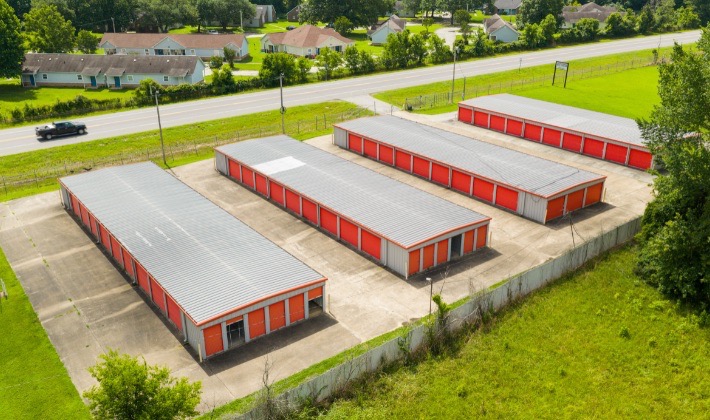
The most extreme version of it I know is AJ Osborne, who mentors the Inner Circle I came up through at Cedar Creek Capital. Years ago AJ was hit with Guillain-Barré syndrome, an illness that paralyzed him and put him in a hospital bed for months, at one point unable to breathe on his own, let alone work. His paycheck stopped the day he got sick. His storage facilities did not. The income from the assets he owned kept arriving every month and carried his family through the entire stretch he could not work. He recovered, but the lesson was permanent: the assets paid him when he could not pay himself.
A high income is rented security - you pay for it again every month with your time, and the day you cannot pay, it is gone. If you're a high earner, you may feel this even if you can't quite name it. It is the quiet reason someone can out-earn everyone they know and still feel behind.
Owning a real asset changes the math in a few specific ways.
It pays you without your labor. A storage facility full of paying tenants sends money in whether you worked that month, spent it on a beach, or spent it with your family. The income is detached from your effort, which is exactly what you want.
It compounds. Money that comes from an asset can buy more assets, and those pay you too. Income from your job mostly funds your life. Income from ownership can fund more ownership.
And it transfers. You can hand an asset to a partner, to investors, or to your kids, and it keeps producing in their hands. You cannot hand anyone your salary.
Not every kind of ownership pays you while you hold it, though. The version most people already have is stocks, usually through a 401(k) that came with the job. That is real ownership, and it is the easy one, but a growth stock does not send you anything until the day you sell it. Unless you are deliberate about owning dividend payers, your shares get bigger on a screen without putting a dollar in your pocket. Real estate and a business are different. They pay you to hold them, not only to sell them.
Most people think this means quitting their job to become a full-time operator but that's not necessarily true. You can keep the high income and point it at ownership, so the thing you earn starts buying the thing you keep.
For us, the ownership vehicle is self-storage.
The reason is simple. It is a real asset that produces cash, and the income is something you can grow by running the place well rather than by waiting for the market to hand you a higher price. About 65% of the storage industry is still owned by independent, non-institutional operators, and a lot of them run their facilities the way they did fifteen years ago, with pricing that has drifted below the market, no easy way to rent a unit online, and delinquent tenants who slip through the cracks. That is not a knock on them. It is income left on the table that better operations can pick up, and picking it up does not depend on the market getting better.
The first time we ran this playbook was on a small multifamily property in Albuquerque. Not storage, but the mechanics were identical. It was underperforming when we took it over, and over about three years we grew its value from roughly $550,000 to about $889,000, almost entirely by fixing pricing, occupancy, and marketing. For the investors who came in alongside us, that worked out to roughly a 2.25x equity multiple. That was one property with its own circumstances, and every deal carries its own risk, but the shape of it matters more than the numbers: the return came from operating the asset better, not from betting the market would reprice it.
We run self-storage the same way now, and the asset class fits the approach even better. You do not have to run a facility to own one. Our investors own the asset and the income it produces. We handle the operating. That is what passive investing in these deals actually is, ownership without the operating, which is the cleanest way I know to turn a high income into the kind of wealth that pays you whether you clock in or not.
If you are the high earner reading this, noodle on this a bit.
I used to think the big paycheck was the destination. It took me too long to see it was only the fuel.
Your income is the input - ownership is the output. The job, the practice, the business you built, those fund the assets. The people who end up wealthy are rarely the highest earners in the room. They are the ones who turned earning into owning early, then let it compound while everyone else kept chasing a bigger number.
The honest part: I am obviously not against a high income. Mine paid for the first deals we ever did, and my partner Phillip flies as an airline captain while we build this. But it was the assets that income bought, not the income itself, that changed what my family actually owns. If you are earning well and none of it is buying ownership, that is the gap worth closing first.
So before your next commission check hits your bank account, ask yourself one question. If your income stopped tomorrow, how long would your life hold up on what you already own?
If the honest answer bothers you, that is the work. Putting your income to work owning real assets, instead of only earning, is the entire idea behind what we do.
Join our investor list and you'll see each storage deal as it comes up, with the documentation to evaluate it on your own terms.