A tenant can rent a self-storage unit, sign the lease, and access their new unit at 9:45pm without a single employee involved.
Here's what that actually requires. The facility inventory has to stay accurate, with no one manually checking it, so the unit showing available online is actually available. The tenant needs to be able to e-sign the lease on a phone screen standing in a parking lot, not meet someone in person or wait for a callback the next morning. The payment has to clear instantly, not get batched for someone to process when the office opens. And the physical unit has to unlock the moment that payment clears, without anyone driving over to hand off a key.
Any one of those pieces failing breaks the whole thing. A slow payment processor means a tenant standing at a unit that won't open. An inventory system that isn't synced in real time means someone renting a unit that's already occupied. This only works because every piece is talking to the same system at the same time, not because any single piece is impressive on its own. None of that works unless the facility itself is built and equipped correctly from day one.
Every one of those steps used to require a person standing in a specific building during specific hours, because that's what the technology available could do when most of these facilities were built. That type of staffing isn't actually required anymore, provided the systems are set up correctly from the start. A phone can be answered from anywhere. An e-signature doesn't care what time it is. A lock can be told what to do by the same system that just took the payment.
Most of the self storage industry still runs on the old model. The mom-and-pop operators we buy from paid someone to sit at a desk five or six days a week because there wasn't another option at the time.
There's another option now. We set up our facilities to leverage what technology makes possible today, not what tenants expected decades ago.
Getting a facility ready to run without on-site staff starts well before you flip any digital switches.
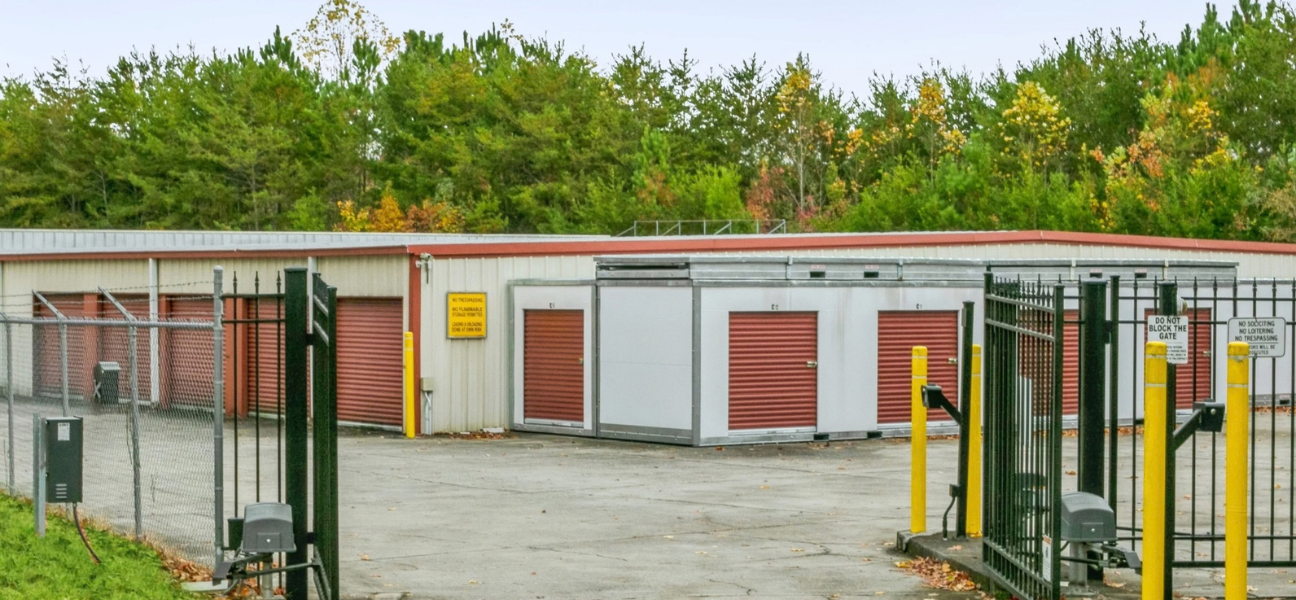
At our Texarkana property, the first pass wasn't about apps or automation at all. Every exterior light got replaced with LED, then the same thing inside. More than one fixture came apart packed solid with bugs, dozens of them, wedged into the wiring compartment behind the cover. Interior light switches moved to motion sensors, because the old switches were in awkward spots that were hard to find while carrying a box. We made sure the gate opens reliably every time, since that's the very first thing a tenant interacts with, before they ever reach a unit or a lock.
Then the less obvious stuff. Trees leaning over the fence line are getting trimmed back, partly for the fence and partly so we're not sweeping up leaves every week. We're sealing the bottom of every unit door and adding weather stripping to the entry and exit doors on the climate-controlled buildings, so the HVAC system isn't working overtime. Units that sat full of abandoned belongings are getting cleared out so they can be rented again.
It's tempting to skip straight to the software when you're building out a remote-management stack. The technology is the interesting part, and it's what gets talked about. But none of the automated systems work well on top of a property that isn't. You can't run a remote leasing system on a gate that sticks half the time, or expect a tenant to trust an app-controlled facility when the lighting outside their unit doesn't work. Getting the physical property right comes first, and it's usually the least glamorous part of the whole build.
"Overlocking" used to mean something very different at a self storage facility, and fixing that process mattered more than it might sound like it should.
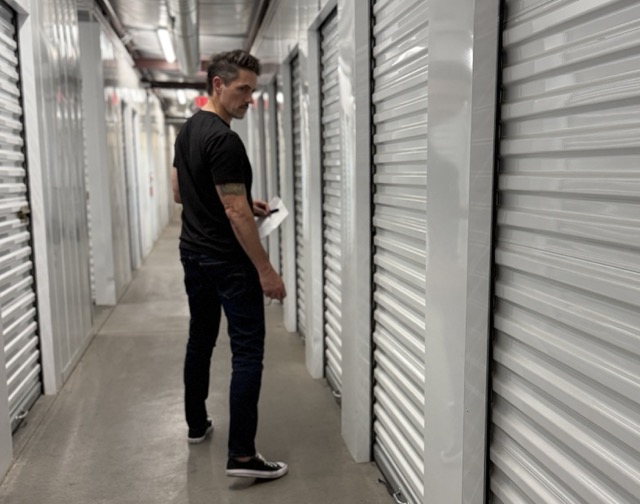
When a tenant stopped paying, an employee had to physically walk the property with a printed delinquency list, find the right unit number, and place a second lock over the tenant's existing lock by hand. That blocked the tenant's access without removing their belongings. Then that same employee had to track which units were overlocked, cross-reference it against who then paid their balance, and go back out to remove locks one at a time to grant them access again.
Miss a unit on the list, and a delinquent tenant keeps full access for another month. Forget to pull a lock after someone catches up, and a paying tenant gets locked out of their own stuff and calls furious. Both mistakes are easy to make when the process depends on one employee manually tracking a paper list, week after week, at every facility they're responsible for.
The fix isn't a better checklist. It's removing the manual step entirely. In our system, every unit runs on a lock tied directly to the current payment status, in the same system that processes rent. Bring your account current while you're standing at your unit, it unlocks immediately. Miss a payment, it locks again on its own. Nobody walks the property with a clipboard, and nobody has to remember anything.
It's a small mechanical change on paper. It also used to be one of the most tedious and error-prone parts of running a facility the old way, the kind of task that quietly ate hours every week and occasionally blew up into an angry phone call when someone got it wrong. In our model, it just runs.
The one-hour response commitment we hold ourselves to only works because most calls and messages never actually wait for a person to see them first.
Every inbound call, text, and email to the facility runs through a system built to handle it immediately, not sit in a queue until someone's free to check. Routine requests, gate code resets, payment questions, unit availability, get handled the moment they come in. Anything that actually needs a person's judgment gets flagged and routed, with a timestamp attached the second it lands, so nothing sits unseen in an inbox waiting for someone to happen to check it.
That's the part that's easy to miss when you picture "unstaffed." It's not that nobody's paying attention, it's that the system is paying attention constantly, in a way one person sitting at a desk during business hours never could. A tenant calling at 9pm on a Sunday gets the same response speed as one calling at 10am on a Tuesday.
Most people hear "unstaffed" or "remote managed" storage facility and assume that means harder to reach when something goes wrong. It's actually the opposite for us, thanks to the systems described above.
We aim to return every tenant call within an hour. If we don't, that tenant's next month is free. That's not a marketing line, it's a standing commitment tied to a system that logs every call and message the moment it comes in and flags anything that hasn't been followed up on.
A lot of traditionally staffed facilities don't have that. One person answers the phone when they're at the desk, misses it when they're not, and there's no reliable record of who called back and who fell through. The tenant experience depends entirely on whether that one person remembered, on a given day, at a given facility, out of however many they're responsible for.
Most tenants don't want ongoing contact anyway. They want the unit to work, the payment to clear, and to never think about the facility until they need something from it. The moment that changes is the moment something breaks, a lock won't open, a payment fails, they're stuck outside at an odd hour. That's exactly when a fast response matters most, and it's also exactly the moment a traditional facility is most likely to have nobody answering.
Removing the person from the desk didn't make us harder to reach. It's what made a one-hour response commitment possible to keep in the first place.
We didn't set out to build a facility that runs itself because it sounded impressive. We built it because a mom-and-pop operator paying someone to sit at a desk five days a week was never actually solving the problem tenants cared about, they just didn't have another option. The technology existed to do better. Most of the industry hasn't caught up to it yet.
If you've ever called a business, gotten nobody, and never gotten a call back, you already know what the old model gets wrong. What would change about how you evaluate an operator if you knew exactly how fast they'd actually respond when something went wrong?
If you want to see how we're applying this across the portfolio as we bring on more facilities, connect with us here or reach out directly.